COLD WAR HISTORY: repeating or rhyming?
Can the current global situation, particularly the strategic competition between the US and its allies, and Russia and China be considered a 21st-century version of the Cold War? There are major differences.
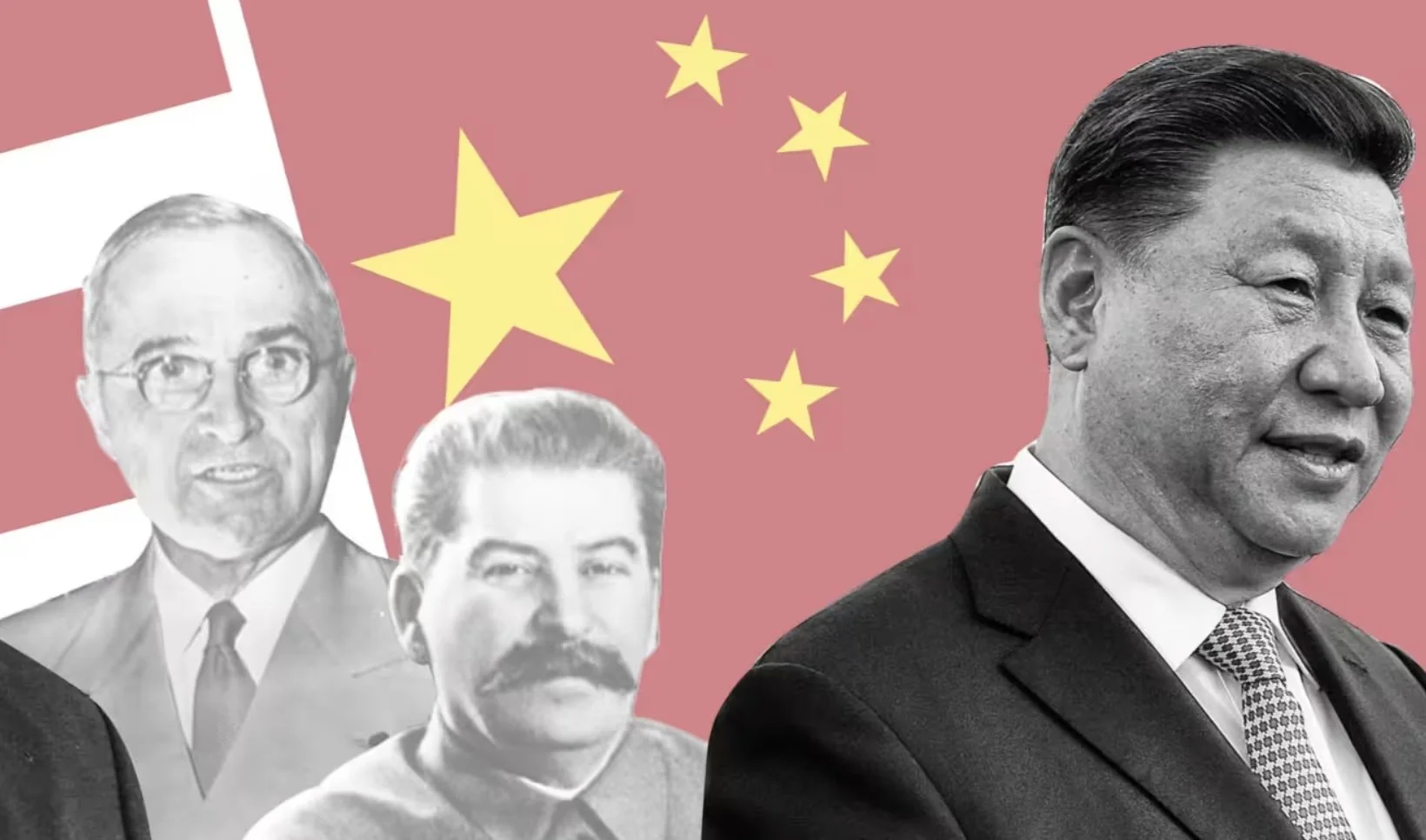
Meet the new boss… same as the old boss?
The current resurgence in great power competition between the US/allies and the “CRINK”[1] does not constitute a twenty-first-century Cold War. A “cold war” is an ideological struggle for global influence between powers with the mutual ability to destroy each other, which creates a rational interest in avoiding armed conflict. While the current great power competition maintains mutually assured destruction, the CRINK’s goals resemble imperial struggles over territory, natural resources, or historical grievances more than efforts toward ideological hegemony.
The roots of the Cold War’s ideological conflict run deep. In 1870, Carl Marx and Friedrich Engels argued that property ownership led to capital improvements and a stratified class structure. This concentration of property directly contributed to industrialization, benefiting a top tier of wealthy capitalists at the expense of the proletariat, which would eventually lead to a revolution.
By 1918, the Industrial Revolution had created enough wealth and property ownership gaps to lend credence to the Marx-Engels philosophy. Under this banner, Vladimir Lenin led the 1917 Bolshevik Revolution against imperial Russia. However, Lenin modified Marxist ideology by asserting that it was more effective for the proletariat to overturn imperial powers through revolution rather than to wait for societal change. By design, the Bolsheviks became the representative vanguard of the proletariat to instigate that revolution first in Russia, and later in the rest of the world. Not only had Marx-Engels’ ideology taken hold, but it had also been provided with a strategy for global implementation.
Lenin’s bold vision was to push against imperialism as a prime foe, believing that Marx had overlooked imperial deceit. As Lenin saw it, imperialist governments had seized resources to “buy off” the working class. For instance, a worker in Britain was not revolutionary because he was seduced by products extracted from other parts of the world. Lenin, therefore, sought more vulnerable areas of the world where workers might be less content to foment worldwide revolution. A quote (perhaps erroneously) attributed to Lenin encapsulates his vision: “'We will take Eastern Europe. We will organize the hordes of Asia. And then we will move into Latin America and we won't have to take the United States; it will fall into our outstretched hands like overripe fruit.”[2]
Simultaneously, Wilson promoted a liberal world order based on capitalist democracy. His “open covenants of peace” and “Fourteen Points” advocated transparent diplomacy, free trade, open societies, and the rule of international law to prevent future conflicts. Lenin’s interpretation of Wilsonian democracy evolved in Soviet lore over the years, making the United States the “main enemy” by perpetuating a belief that imperialists seek to crush the Soviet state with the US as the imperial leader. The West’s 1918 intervention in the Russian civil war added fodder to this narrative.[3] The ideological struggle had been joined.
After World War II, the Soviets sought geopolitical and ideological advantage by consolidating territorial gains in Germany and Eastern Europe. A defining competition immediately emerged in Europe between the American-led capitalist Marshall Plan and the Stalin-led Soviet system, as envisioned by Lenin. Undergirding the competing ideologies, both sides acquired the capability to destroy each other with nuclear weapons, satisfying the conditions for a cold war. For the next 46 years, while tensions ebbed and flowed, leaders on both sides believed they were advancing or defending a global ideological agenda. Under the shadow of Armageddon, they battled for hegemony while avoiding armed conflict.
In today’s US-CRINK struggle, the only ideological component is authoritarian imperialism against the so-called “rules-based international order.” But the authoritarians are not united under a common ideology. China, Communist in name, is capitalist in practice, diverging significantly from the Marxist-Leninist tenets. Its ambitions for Taiwan are rooted in historical grievances rather than revolutionary fervor. China’s Belt-and-Road-Initiative and Made-in-China-2025 initiatives indicate an effort to secure a supply chain for economic self-sufficiency. Today’s Russia is a fascist state with imperialist designs based on history. North Korea is an isolated cult-state that does not seek to export ideology. Iran’s designs on the Middle East are rooted in the destruction of Israel, which it sees as a tool of the West.
While Cold War tactics such as containment might apply to limiting the CRINK's imperial aspirations, none of these powers seeks global ideological dominance as the Soviets did from 1917 to 1991. For that reason, a comparison to the Cold War falls short.
[1] China, Russia, Iran, and North Korea
[2] Karl Meyer, “The Elusive Lenin,” New York Times, October 8, 1985, https://www.nytimes.com/1985/10/08/opinion/the-editorial-notebook-the-elusive-lenin.html.
[3] Nikolas Gvosdev, “HIST E-1960 -Lec 1.”