cold war history: nicaragua and the sandinistas
A look back at prior Cold War competition in Central America
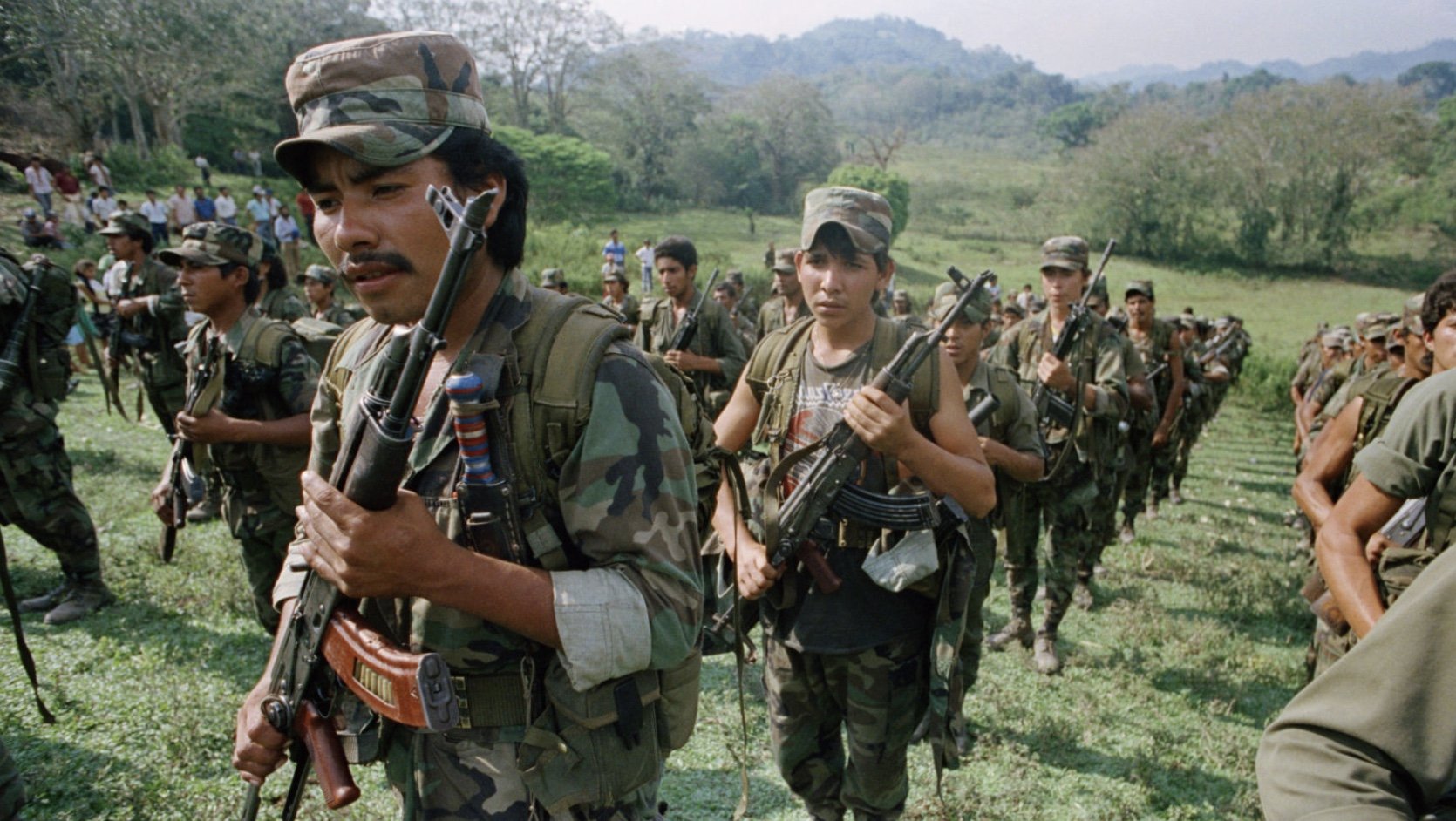
Were they fighting to dominate the Western hemisphere for the USSR or just get rid of Somoza?
In a geopolitically significant yet small country, American interventionists spoke of the Wilsonian rule of law and sent troops to maintain economic order. To keep the peace, the US supported a stable strongman, whose autocracy, over time, fueled a leftist uprising. It soon turned into a Cold War battlefield.
If the story feels familiar, it’s because it is, with parallels to Cuba and Vietnam. Yet Nicaragua is arguably the most instructive regional conflict in great power competition due to its timing near the Cold War’s end and its long American relationship. It also reflects American foreign policy thinking in the latter 20th century, when, arguably, the US repeated mistakes made in Cuba and Vietnam. Let’s review.
Active American interventions in Latin America go back a long way.
In the early twentieth century, Roosevelt, Taft, and Wilson all treated Nicaragua as a project of “Manifest Destiny,” geopolitically relevant for the creation of an inter-ocean canal. (Later, during TR’s presidency, that would become Colombia-Panama, of course).
The drive toward manifest destiny began with economic hegemony. Taft sought to stabilize American involvement in Nicaragua through “Dollar Diplomacy,” which was supposed to smooth customs arrangements and settle raucous political upheavals across Central America. That financial treaty was intended to box out Europe and create trading partners that American banks could back.[1] In 1909, when Nicaraguan President Zelaya actively courted British lenders in defiance of the American objective, Taft tacitly supported his removal. After Zelaya’s overthrow, American emissaries advised a constitutional convention and promised public works for development loans. However, Congress balked at the arrangement, and Nicaragua fell into chaos.
On the heels of the disorder, Nicaragua’s nascent government asked for American help. They requested the US to “guarantee with its forces security for the property of American citizens and to extend protection to all inhabitants of the Republic.” And so it was that Marines landed in Nicaragua in 1912 and occupied the country to restore stability for the next twenty years, often subduing guerrilla movements. The US finally withdrew under FDR’s “Good Neighborism” policy and entrusted leadership to the American-trained National Guard under the command of the Somoza family.
By the early 1970s, Anastasio Somoza held nearly all of Nicaragua’s material wealth and ruled with an iron fist. A fracture in his control occurred with a (literal and figurative) 1972 earthquake that showcased a pitiful Somoza response, sparking popular revolt from the suffering citizens who, at that point, thoroughly detested the dictator.
While moderates sought US support for regime change, the Carter administration honored a self-imposed hemispheric nonintervention policy and (indefensibly) praised Somoza’s human rights record. By the end of the decade, Carter’s insouciance and Somoza’s cruelty had led to a militarized uprising through the FSLN (Sandinistas).[2]
Trained by Cuba, the FSLN gained enough battlefield success and popular momentum to force Somoza into exile in Miami. As Somoza fled, he complained that Carter and the US had let him down after his “decades of fighting communism.”[3]
Was the FSLN a Marxist-Leninist group bent on Leninist expansion or an organized resistance seeking self-determination? Perhaps a mix of both. One could conclude that the muddled American foreign policy of the seventies only made things worse.
“They always wanted to say we were communist, but we just wanted freedom,” said an FSLN commander in 2018.[4] As in Cuba, having broken the yoke of an autocrat, the FSLN established a government that the US immediately punished through a trade embargo. This only exacerbated economic hell and led to an unfortunate rebel alliance with the Soviets, who were more than happy to take advantage.
Alas, Nicaragua was classified as one of the “falls” of the 1970s, along with Iran and Afghanistan. The Reagan administration sought to right those wrongs by reestablishing American global power. In Nicaragua, Reagan quickly pushed for a counterrevolution through the Contras, painting the fight against the Sandinistas in stark Cold War terms—and by then, that may have been the case: “The Sandinistas describe themselves as the vanguard of a revolution that would sweep Central America,” he said in a televised national address. In the same broadcast, he went on to describe pending Soviet air and submarine bases in Nicaragua.[5]
With divided American government ruling the day, Congress opposed the bulk of Reagan’s request to fund the Contras. His administration attempted to equip the counterrevolutionaries through alternate means, which sparked the Iran-Contra scandal shortly before the Cold War’s end.
Epilogue: Somewhat ironically, with the Cold War over, the FSLN won legitimate elections in 1990 and 2006, which could be interpreted as proof of a drive for self-determination all along (albeit socialist). Sadly, the FSLN’s leader, Ortega, is now considered an autocrat by the very FSLN leaders of the 1980s rebellion, who seek to revolt all over again.
[1] Dana Munro, “Dollar Diplomacy in Nicaragua, 1909-1913,” The Hispanic American Historical Review 38, no. 2 (May 1958): 209–34.
[2] FSNL: Frente Sandinista de Liberacion Nacional, better known as “the Sandinistas.”
[3] William LeoGrande, “The Revolution in Nicaragua: Another Cuba?,” Foreign Affairs 58, no. 1 (Fall 1979): 28–50.
[4] Las Sandanistas, Documentary, 2018, https://www.lassandinistas.com/about-the-film.
[5] “Address to the Nation on the Situation in Nicaragua,” Oval Office Address, March 16, 1986, Ronald Reagan Presidential Library & Museum, https://www.reaganlibrary.gov/archives/speech/address-nation-situation-nicaragua.